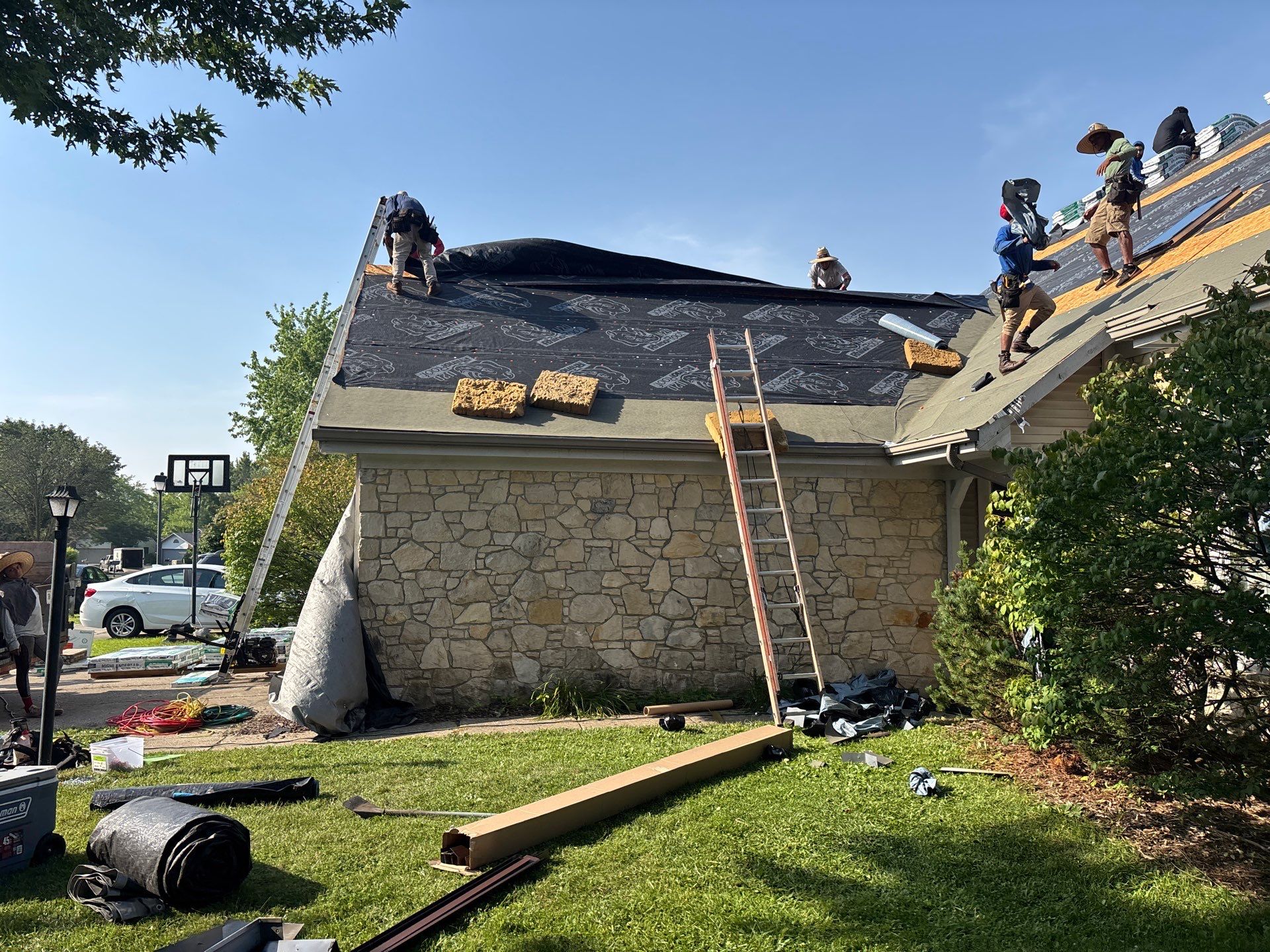
Pre-Install Assessment
- Confirm roof pitch. Deck mounted skylights require a minimum 14 degree pitch (roughly 3:12). Curb mounted units can go as low as 10 degrees with a 4 inch site built curb.
- Measure rough opening. Standard residential sizes run from 14.5 by 45.75 inches up to 44.25 by 45.75 inches. Verify the unit's rough opening spec before cutting.
- Locate rafters with a stud finder and confirm on center spacing (typically 16 or 24 inches in Bridlewood homes built after 1970).
- Check attic clearance for the light shaft. Minimum 4 inches of clearance around the opening for headers and trimmers.
- Scan the surrounding field shingles. If granule loss exceeds 30 percent or shingles are brittle, factor that into the scope before starting.
- Verify electrical and plumbing runs in the attic. HVAC flex duct, romex, and vent stacks within 18 inches of the planned opening must be rerouted before framing begins.
- Check weather window. Bridlewood Roofing schedules skylight cuts only when the forecast shows less than 20 percent precipitation for 48 hours and wind under 15 mph.
Materials and Tools Checklist
- Skylight unit plus manufacturer flashing kit (do not substitute generic step flashing)
- Ice and water shield, 36 inch width, minimum 2 rolls
- 15 lb or 30 lb felt underlayment
- 2x6 or 2x8 framing lumber for headers and trimmers
- #8 by 2.5 inch deck screws and 16d framing nails
- Polyurethane sealant (not silicone) rated for exterior use
- Reciprocating saw, circular saw, pry bar, chalk line, cordless drill
- Harness, rope, and roof anchor rated for 5,000 lbs
- Tarps (minimum 10 by 12 feet) to cover attic insulation and interior floor below the cut
- Magnetic nail sweeper for post job cleanup in landscaping and driveways
Bridlewood-Specific Specifications
- Use ice and water shield, not just felt, on all four sides of the opening. Bridlewood winters produce ice dams that push water uphill.
- Specify Low-E argon filled glass with a U-factor at or below 0.30 for meaningful energy performance.
- Install venting skylights in bathrooms and kitchens to reduce condensation that mimics leaks.
- Confirm attic insulation does not block airflow around the light shaft; blocked soffits accelerate frame rot. Our roof ventilation problems guide covers the intake exhaust balance.
- Orient fixed skylights on north or east facing slopes when possible. South and west exposures in Bridlewood add 15 to 25 percent cooling load in July and August.
- Choose laminated inner glazing on any unit positioned over a bed, tub, or high traffic area to meet safety glass requirements for overhead installations.
Step by-Step Installation
- Mark the opening from inside the attic. Drive 4 reference nails up through the deck at each corner of the planned rough opening.
- Strip shingles. Remove shingles in a 24 inch perimeter around the nails. Pull nails cleanly; do not snap them off.
- Cut the deck. Snap chalk lines between the reference nails. Cut with a circular saw set to deck thickness (typically 0.5 to 0.625 inch) to avoid hitting rafters.
- Frame the opening. Install double 2x6 headers at top and bottom. Sister trimmers to existing rafters if the opening cuts one. Fasten with 16d nails at 6 inch on center.
- Dry fit the skylight. Set the unit in the opening and confirm 0.25 to 0.5 inch clearance on all sides. Adjust framing if tight.
- Install ice and water shield. Apply a 9 inch wide strip around the entire opening, lapping onto the deck and up the skylight frame flange. This is the single most important leak defense in Bridlewood winters.
- Fasten the unit. Use the manufacturer brackets and screws. Torque to spec; overdriving will distort the frame and crack the seal.
- Install underlayment. Lap felt over the lower flange and under the upper flange, shingle style.
- Install flashing kit in sequence. Sill flashing first, then step flashing up both sides (one piece per shingle course), then head flashing last. Do not reverse this order.
- Re shingle. Weave new shingles into the step flashing. Keep nails 2 inches minimum from the flashing edge.
- Seal strategic points only. A thin bead of polyurethane at the head flashing upper edge and at any exposed fastener. Flashing does the waterproofing, not caulk.
For homes where the surrounding deck shows widespread damage during step 1, review the guidance in our signs your roof needs replacement article before proceeding with a skylight that will outlive the field around it.
Light Shaft Construction
- Frame the shaft with 2x4 studs at 16 inch on center between the roof opening and the ceiling opening.
- Choose shaft geometry. Straight shafts are simplest. Flared shafts (wider at ceiling than at roof) increase light spread by roughly 40 percent but require additional framing.
- Insulate shaft walls to R-21 minimum with faced batts, vapor barrier toward the conditioned side.
- Install 0.5 inch drywall, tape, mud, and prime. Use mold resistant board in bathroom applications.
- Finish with a bright white semi gloss paint to maximize reflected light into the room below.
Quality Control Before Leaving the Roof
- Visually confirm head flashing overlaps step flashing by 4 inches minimum.
- Check that no fasteners penetrate the flashing field.
- Run a final hose test for 15 minutes, top to bottom.
- Inspect the interior frame for any daylight gaps or insulation compression.
- Clean glass, remove protective film, and photograph completed work.
- Sweep the surrounding roof field and ground perimeter with a magnetic bar to recover stray nails and metal debris.
- Record the unit model number, serial number, and install date on the Bridlewood Roofing project file for warranty registration within 30 days.
Repair Procedure for an Existing Leak
- Identify the leak source. Water stains directly below the skylight usually trace to one of four points: head flashing, step flashing, the glazing seal, or the light shaft condensation (not a leak at all).
- Run a 10 minute hose test, starting at the sill and working upward in 2 minute increments. Note which zone triggers the drip.
- Inspect head flashing for lifted edges or nail pops. Re seat and seal with polyurethane.
- For failed step flashing, pull shingles back, remove the damaged piece, slide in a new 5 by 7 inch piece, and re nail high.
- For a failed glazing seal on units older than 15 years, the unit itself is at end of life. Replace rather than patch.
- Document findings with photos. If the damage ties to a recent storm, this record supports a storm damage insurance claim in Bridlewood.
- Check the interior drywall return. If the paint is bubbling or the corner bead is rusting, moisture has been present for at least 60 days and the shaft drywall likely needs replacement, not just repainting.
Why Skylight Work Is Not a DIY Job
Of all the projects a handy homeowner might attempt, a skylight is one of the least forgiving. The unit has to be tied into the roof with a layered flashing assembly that sheds water in the right sequence, the surrounding shingles have to be woven back in correctly, and a light shaft often has to be framed and finished below. Get any layer out of order and the leak may not show up until it has already rotted the deck. On a Bridlewood roof, with our freeze and thaw cycles testing every joint, the margin for error is small. This is work where a proper curb, a manufacturer flashing kit, and an installer who does it routinely are what stand between a skylight that lasts decades and one that leaks within a season.