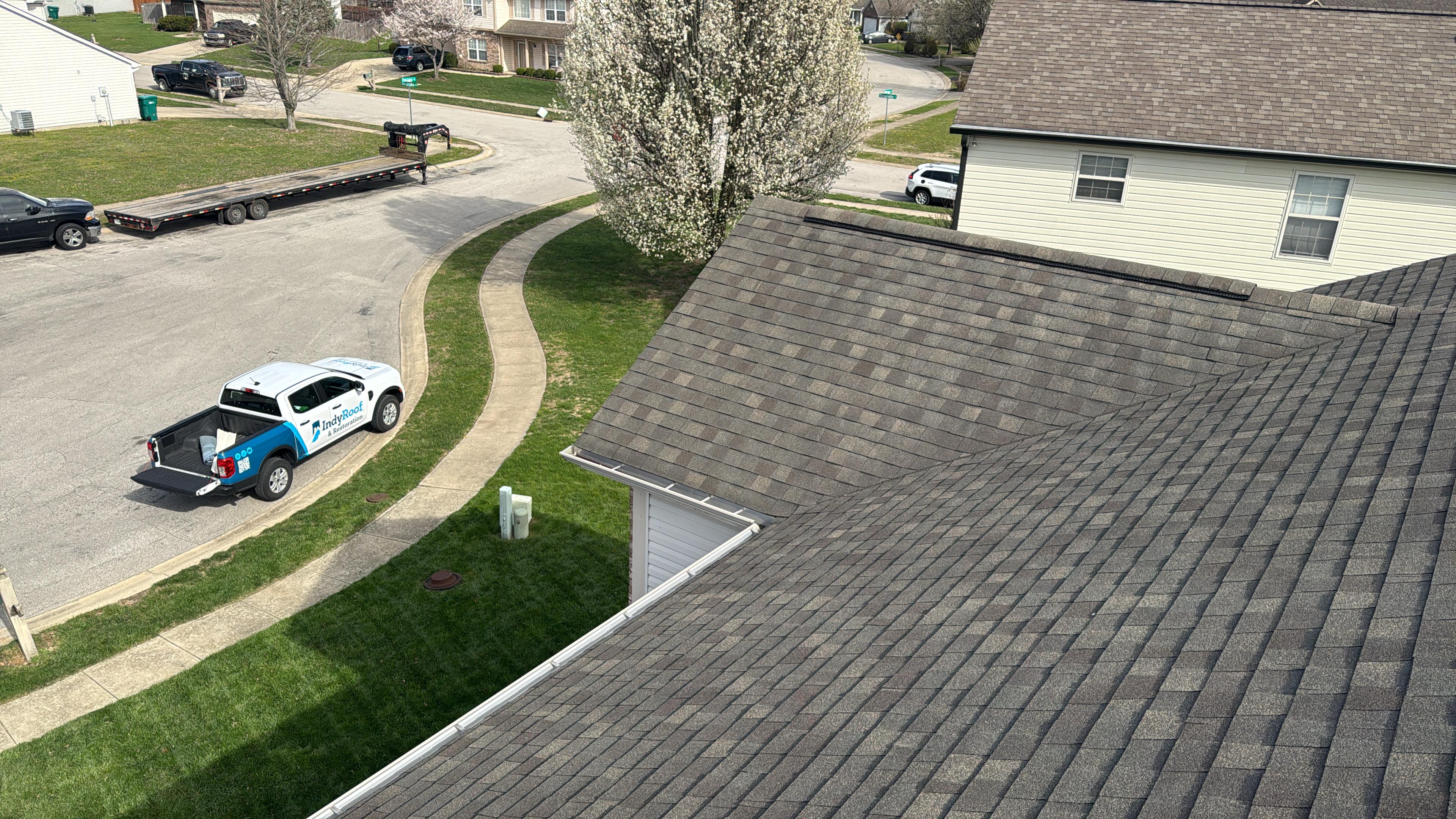
Quick Answer: Why Roofs Leak
Most roof leaks in Bridlewood come from failures at the roof's penetrations and seams, not from the open field of shingles where the surface is doing its job. The leading causes are worn pipe boots, failed flashing around chimneys and walls, cracked or missing shingles, clogged gutters and ice dams, and aging valleys. Water enters at one of these weak points, travels along the wood decking or down a rafter, and drips inside far from where it actually got in. That last detail matters more than any other, because it is why a patch placed under the stain so often fails. Finding the real source means inspecting the likely failure points and following the water back to its entry, not staring at the ceiling stain and hoping the hole is right above it.
Worn Pipe Boots, the Quiet Number One
The rubber boot that seals around a plumbing vent pipe is one of the most common leak sources, and one of the easiest to miss from the ground. The rubber gasket dries out, hardens, and cracks under years of sun and temperature swings, often within ten to fifteen years, well before the shingles around it wear out. A Bridlewood homeowner who sees a stain near a bathroom, kitchen, or laundry should suspect a boot before anything else, since those rooms sit directly under vent pipes. The fix is usually a quick, low cost replacement of the boot, often done in a single short visit. Left alone, that small crack drips a little more every rain and slowly soaks the decking and insulation around the pipe, turning a minor repair into a much larger one over time.
What to Do First
When you find a leak, contain the water inside with a bucket and move furniture and belongings clear of the drip. If water is pooling and bulging against the ceiling drywall, a small relief hole lets it drain in a controlled spot and prevents a larger, messier collapse that does far more damage to the room. Keep well away from any light fixture or outlet the water may be reaching, and cut power to that area if needed. Then get a professional inspection promptly rather than waiting for the next storm. Tracing a leak safely means walking the roof and the attic, which is best left to a roofer with the right footing and experience rather than a homeowner climbing onto a wet, sloped surface. Acting quickly here limits the damage and keeps a small repair small. Because a leak's source can appear in a different spot from where water shows inside, having a professional trace it helps identify the actual cause. Rather than guessing at the source, a professional inspection can pinpoint where the water is getting in and what needs repair. Addressing a leak promptly, once its cause is identified, helps prevent further damage to the roof and home. A professional who has inspected the roof can explain the likely cause of the leak and the appropriate repair.
Flashing Failures Around Chimneys and Walls
Flashing is the metal that seals the joints where the roof meets a chimney, a wall, or a skylight, and it is a leading cause of leaks. When it lifts, rusts, or was sealed poorly during install, water runs straight in at the joint. Chimney flashing is a frequent offender, especially where old caulk has dried, shrunk, and pulled away from the masonry over the years. Step flashing along a wall can fail if even a single piece was bent wrong or skipped during the original install. These leaks tend to show up as stains near an interior wall or around a fireplace, and because the joints handle a lot of runoff, even a small gap leaks noticeably. Resealing or replacing the flashing solves it, and catching it early prevents rot from spreading into the surrounding decking and framing.
Cracked, Curled, or Missing Shingles
Wind can lift or tear shingles, and age makes them curl and crack, so the shingle field does fail sometimes even if it is not the usual suspect. Once a shingle is gone or split, the layers beneath are exposed and water gets a direct path in. After a strong Bridlewood storm, missing shingles are a common cause of a sudden leak, since wind breaks the seal that holds them down and peels them back. Hail does quieter damage, bruising shingles and knocking off the protective granules, which shortens their life and opens the door to leaks later. The damage is not always obvious from the ground. Even a few damaged shingles in the wrong spot, such as directly above a seam in the decking, can let in enough water to stain a ceiling and soak the insulation.
When It Is Not Actually a Leak
Sometimes the water is condensation, not a roof leak at all, and treating it as a leak wastes money. A poorly ventilated attic traps warm, moist air from the living space below, and when that air meets the cold underside of the roof deck it condenses and drips onto the insulation, mimicking a leak almost exactly. This often happens in winter and on dry days with no rain in sight, which is the giveaway. If staining appears without rain and the attic feels humid or smells musty, ventilation may be the real culprit rather than the shingles. A roofer can tell the difference by inspecting the attic and the roof together. The distinction matters because the fix for condensation is added ventilation, while a roofing repair would do nothing to solve it.
Aging Valleys and Skylight Seals
Valleys are the lines where two roof planes meet, and they channel a large volume of water every time it rains, so they take heavy wear and can leak as they age or if they were built poorly. A valley that was cut tight or sealed badly during install may not show a problem for years, then begin leaking as the materials wear. Skylights bring their own flashing and rubber seals that break down over time, and like valleys they concentrate water, so even a small failure shows up quickly inside. Many skylight leaks turn out to be a flashing or seal problem rather than the glass itself, which means a roofer can often reseal or reflash them without replacing the whole unit. Both valleys and skylights are worth a close look whenever a leak appears nearby.
Clogged Gutters and Ice Dams
Gutters packed with leaves and debris back water up under the lower edge of the shingles, and that backup can find its way into the home. In winter the same problem turns into an ice dam, which is one of the more damaging seasonal leaks. Heat escaping into the attic melts snow on the upper roof, the water runs down and refreezes at the cold eave, and a ridge of ice builds that traps more meltwater behind it. That pooled water works under the shingles and into the house, often showing as a stain near the exterior walls. Bridlewood winters make this a real risk. Clean gutters help, but the lasting fix is better attic insulation and ventilation that keep the roof deck cold, so the snow stops melting and refreezing at the eaves in the first place.